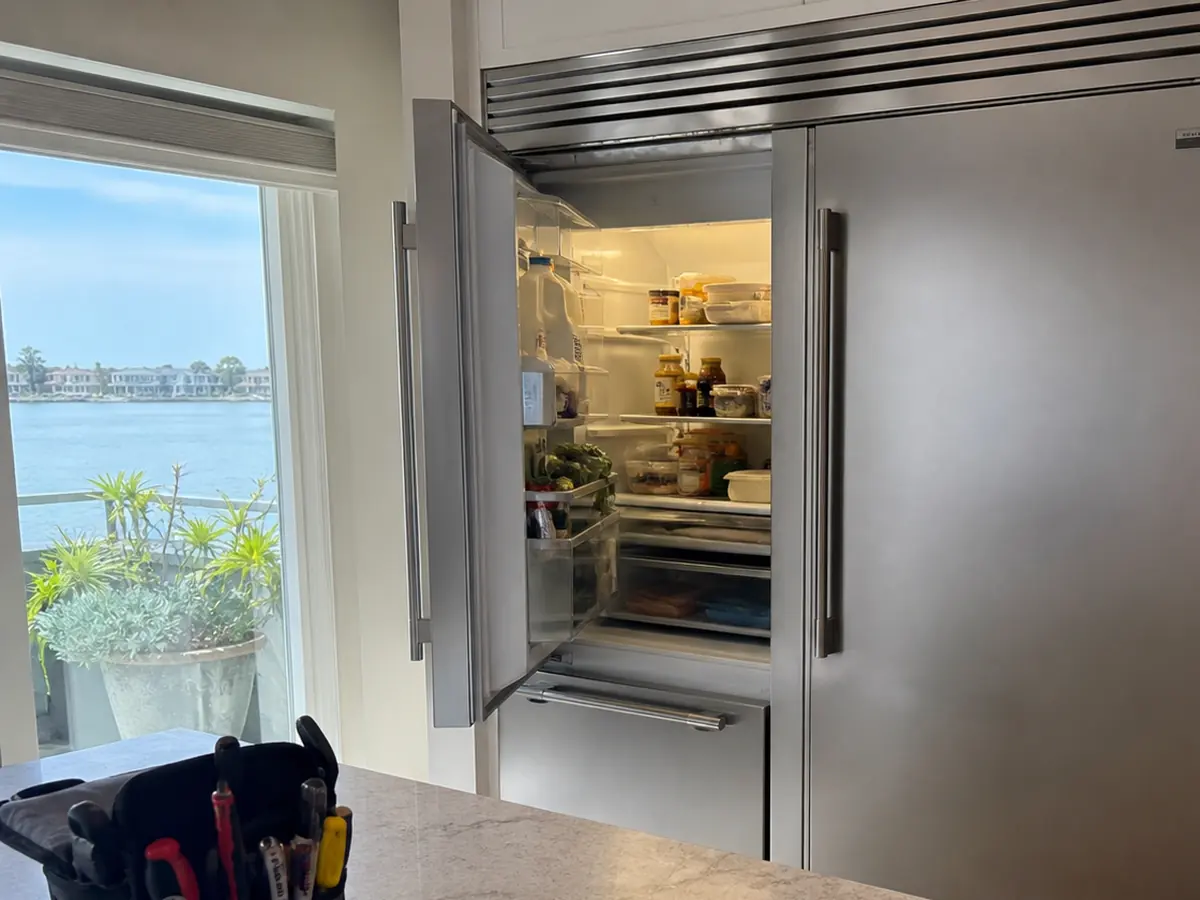
The fresh-food side of our built-in Sub-Zero went warm while the freezer held. They confirmed the model, checked airflow and the condenser, and had it cooling again the same week. Clear estimate, no upsell.
Daniel R.Sea Colony, Foster City
Technician journal for 94404 built-in refrigeration
If the fresh-food side of a Sub-Zero in Sea Colony feels warm while the freezer still seems close, the question is not whether the whole built-in cabinet has failed. In Foster City, lagoon humidity, salt air, fog cycles, swollen gaskets, dusty condenser compartments, and tight waterfront cabinetry can all change the diagnosis. The visit starts with model and serial confirmation, temperature readings, condenser access, door-seal inspection, and a clear recommendation before any part is ordered.
The fresh-food side of our built-in Sub-Zero went warm while the freezer held. They confirmed the model, checked airflow and the condenser, and had it cooling again the same week. Clear estimate, no upsell.
Daniel R.Sea Colony, Foster City
They protected the floor and panels before pulling our built-in, walked me through every temperature reading, and the written estimate matched the final bill exactly.
Megan T.Treasure Isle, Foster City
Fast callback and they clearly knew Sub-Zero columns. They explained what was actually wrong instead of just swapping parts. Highly recommend for Foster City built-ins.
Priya S.The Islands, Foster City
Start with model number, temperature readings from fresh-food and freezer sections, and a visual check of condenser airflow. Diagnostic/service call planning range: $165-$245, credited toward the repair.
Read the detailed Foster City guideUsually belongs in the $480-$1,020 planning range after model verification, hinge alignment and cabinet pressure checks. Final quote depends on gasket availability and access.
Read the detailed Foster City guideShould not be quoted before pressure and electrical evidence. Planning range: $1,650-$3,950, with 2-6 hours on-site plus parts lead time depending on model.
Read the detailed Foster City guideLast updated: 2026-06-05. Ranges and service notes are reviewed as planning guidance; the written estimate controls final pricing, timing and warranty terms.
Usually means: Usually airflow, sensor, door seal, or condenser restriction before anyone should assume a compressor.
Do not do this: Do not keep lowering the set point; it can hide the pattern the technician needs.
Read the diagnostic pathUsually means: Heat cannot leave the machine, so the cabinet runs longer and temperatures drift.
Do not do this: Do not spray cleaner into the grille or force a brush behind wiring.
Read the diagnostic pathUsually means: Water fill, freezer temperature, mold thermostat, or inlet valve needs a measured check.
Do not do this: Do not chip ice out with a screwdriver near the mold or fill tube.
Read the diagnostic pathUsually means: Foster City humidity can turn a small seal gap into frost, odor, and long run time.
Do not do this: Do not glue the gasket; serial-matched fit and hinge alignment matter.
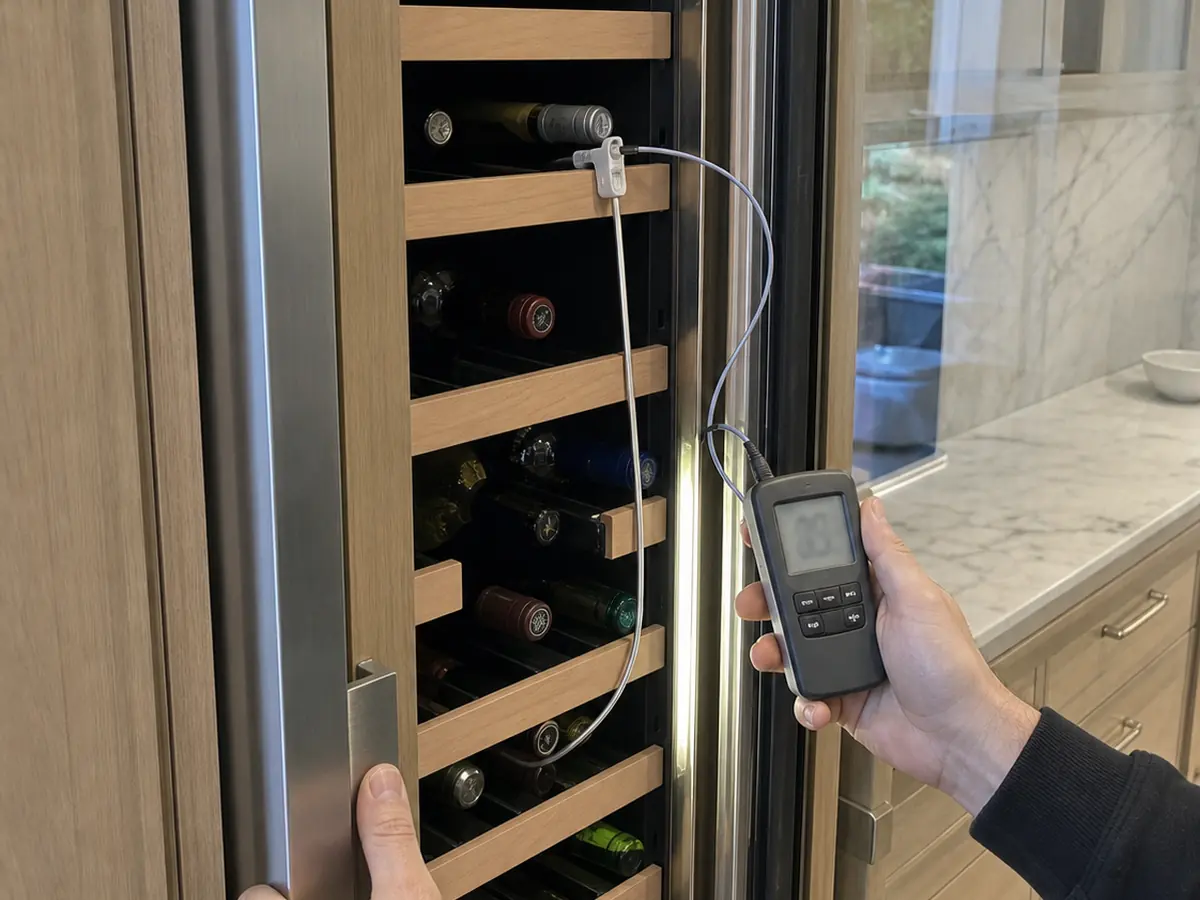
Read the diagnostic pathUsually means: A wine zone needs trend readings, not one quick thermometer glance.
Do not do this: Do not move bottles to the coldest setting until airflow and sensors are checked.
Read the diagnostic pathUsually means: Codes, thermistors, boards, and tight panels need model-specific handling.
Do not do this: Do not pull a built-in unit without floor and cabinet protection.
Read the diagnostic pathPlanning ranges for built-in Sub-Zero service in 94404; the final written estimate depends on model, part availability, cabinet access, water-line condition and the confirmed diagnosis.
| Service | What's included | Price range | Typical time |
|---|---|---|---|
| Diagnostic / service call | Model, temperatures, airflow, lower-grille and water-path check | $165-$245 (credited) | 45-90 min |
| Door gasket / frost-line repair | Serial-matched seal, hinge alignment, panel-pressure check | $480-$1,020 | 1-3 h |
| Ice maker / water-line repair | Valve, filter, fill tube, freezer temp and module checks | $310-$910 | 1-3 h |
| Evaporator / condenser fan | Motor test and model-matched fan, airflow verify | $340-$760 | 1-2 h |
| Thermistor / sensor | Probe reading compared to control, model-matched part | $280-$640 | 1-2 h |
| Control board / display | Quote only after electrical proof and model checks | $420-$1,380 | 1-4 h |
| Sealed system / compressor | Pressure and electrical evidence before any quote | $1,650-$3,950 | 2-6 h + parts |
| Wine-zone cooling repair | Zone sensor, airflow and door-seal diagnosis | $390-$1,150 | 1-3 h |
| Cabinet-safe pull-out & reseat | Panel/floor protection, water-line slack, reseat verify | $220-$560 labor | +1-2 h |
What moves the final number: model and serial family, custom-cabinet access in waterfront kitchens, water-path and salt-air corrosion, and whether the fault is confirmed by a test rather than the symptom alone.
Foster City ice, moisture and cooling complaints often cross systems, so the table keeps water-path evidence separate from cooling evidence.
| Symptom | Water-side check | Temperature-side check | Likely next step |
|---|---|---|---|
| Slow or hollow ice | Filter age, fill-tube frost, valve response, visible line restriction | Freezer temperature and harvest timing | Confirm water path before ordering an ice maker module. |
| Condensation or frost line | Water-line area and cabinet humidity if moisture is widespread | Door seal contact, hinge closure and zone temperatures | Separate gasket/cabinet moisture from true cooling loss. |
| Fresh-food warm, freezer close | None unless ice maker or water dispenser changed recently | Airflow, condenser breathing, evaporator fan and thermistor reading | Start with airflow and sensor evidence before sealed-system suspicion. |
| Both sections weak | Look for prior leaks or corrosion near lower access | Temperature split, condenser fan, compressor behavior and sealed-system proof | Escalate only after basic airflow and control checks are documented. |
| Alarm or display issue | Confirm no water leak or shutoff event occurred first | Model-specific control, sensor and power-event review | Do not quote a board from a generic code alone. |
The owner photo narrows the visit, but the technician test is what should appear on the written estimate.
| Owner can photograph | Useful owner evidence | Technician must test |
|---|---|---|
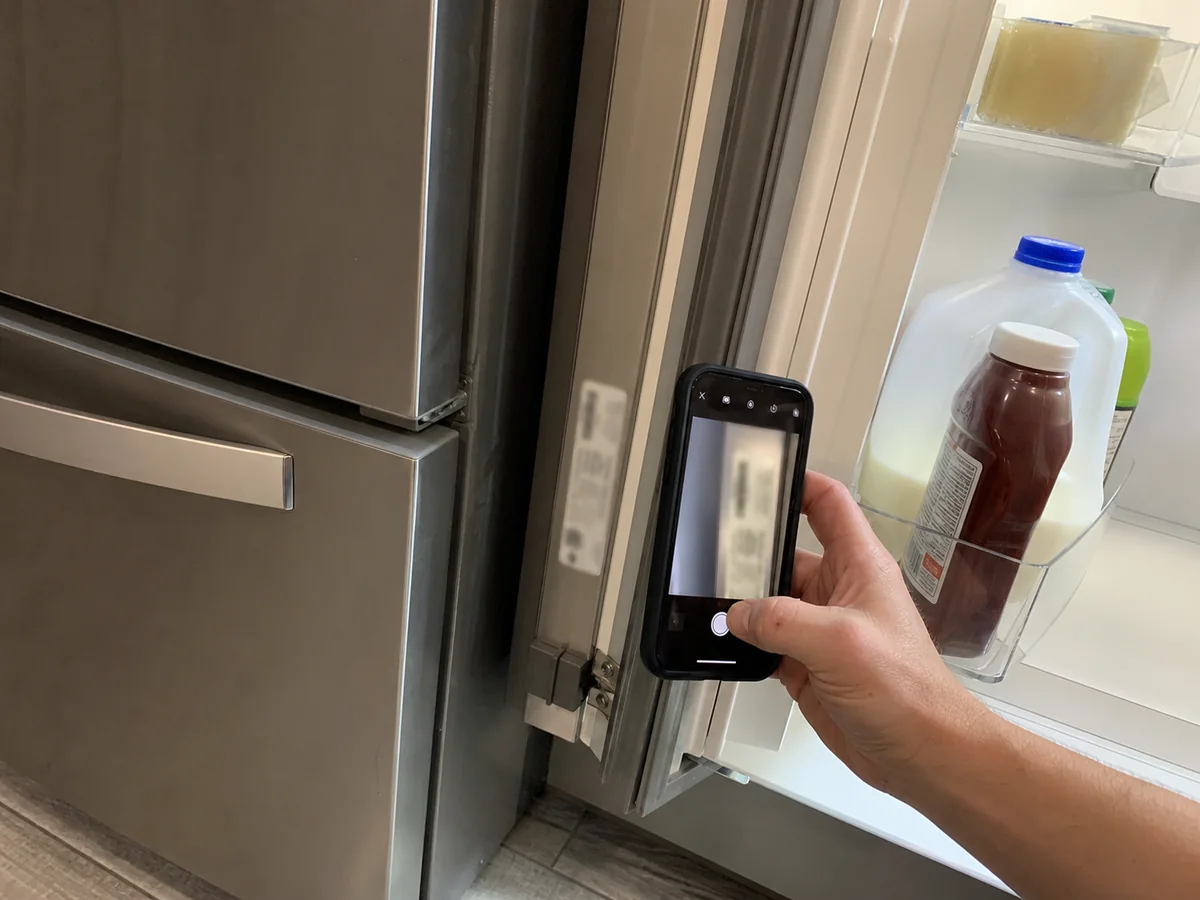
| Model and serial label | Clear photo of the tag plus a wide shot showing location | Match parts, model family and service instructions. |
| Temperature display and food-zone reading | Photo of display plus owner thermometer reading after door has been closed | Compare actual temperature to control and sensor behavior. |
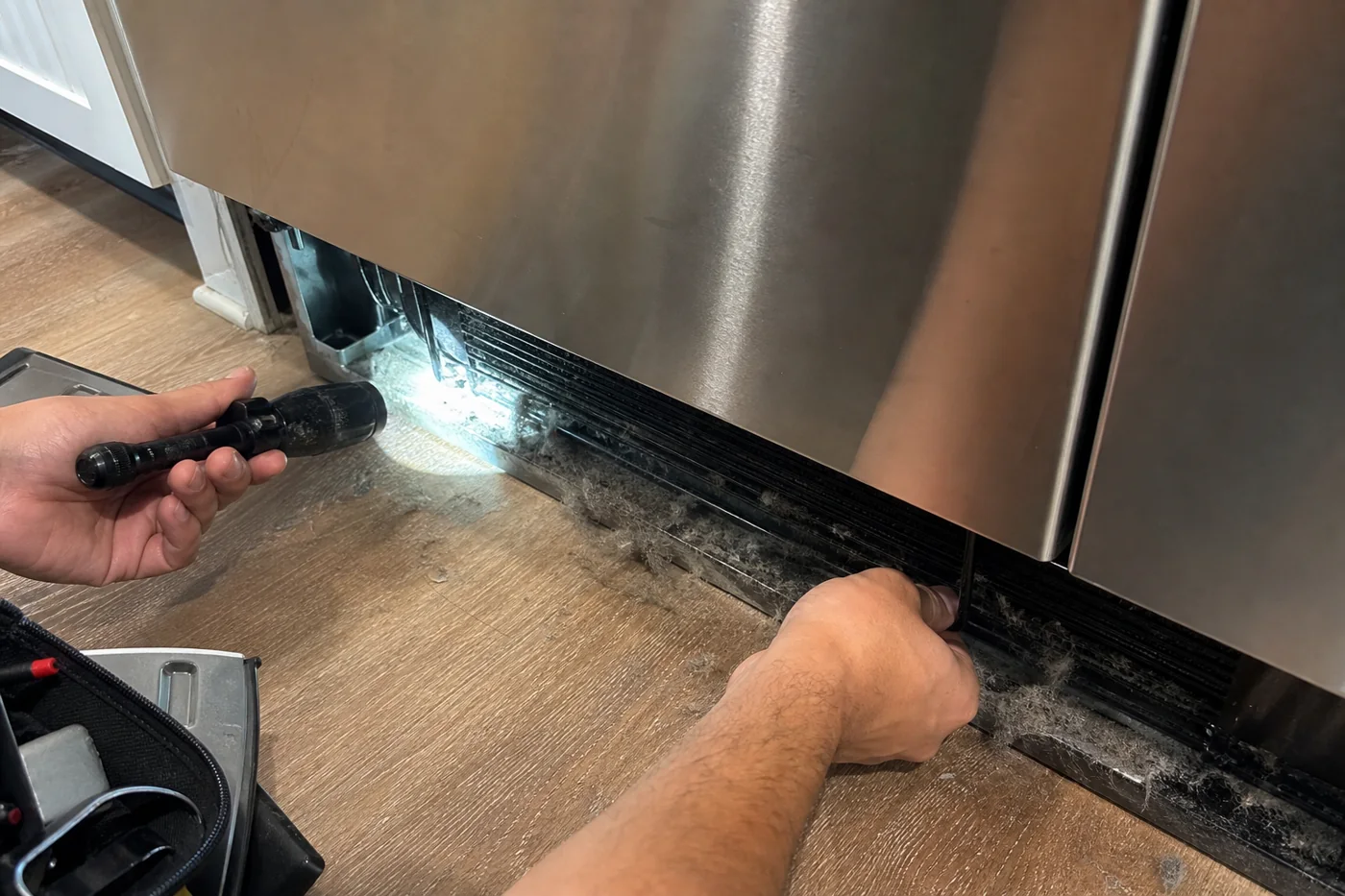
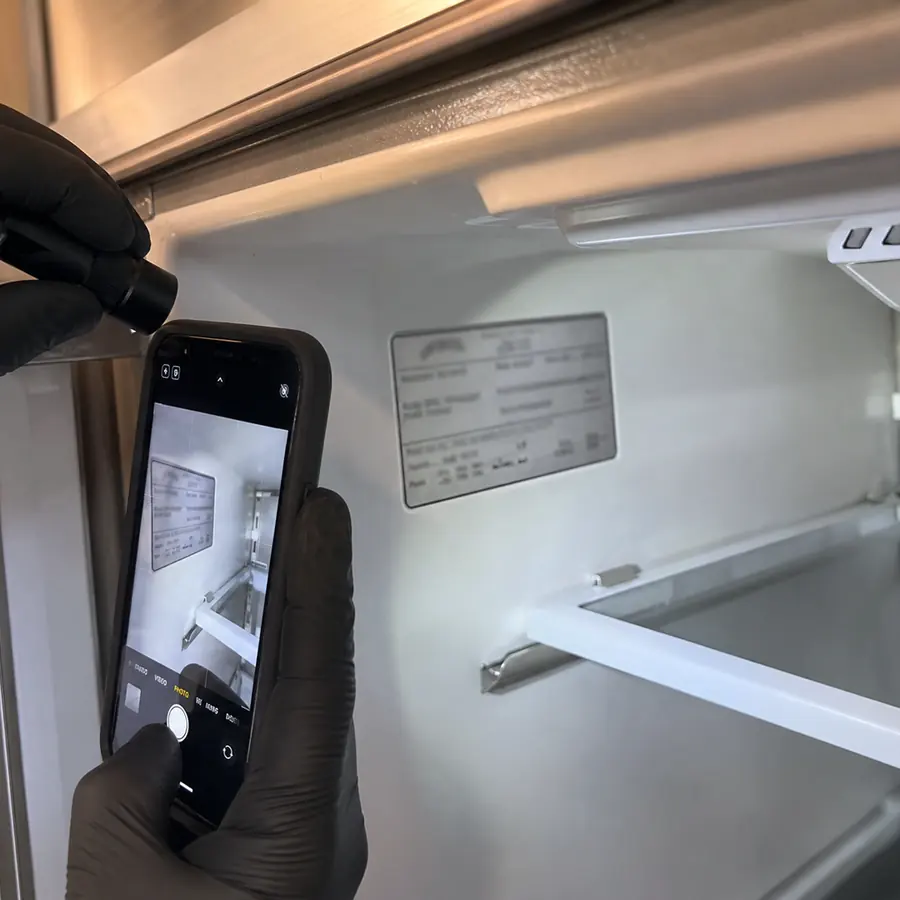
| Lower grille or condenser area | Straight-on photo showing dust, pet hair, corrosion or blocked airflow | Inspect fan behavior, electrical safety and cleaning limits. |
| Ice bin, fill tube or water-line area | Photo of hollow cubes, fill-tube frost, leaks or corrosion | Test fill timing, valve behavior, filter restriction and freezer temperature. |
| Panel gaps and floor path | Wide photo showing custom panels, toe-kick, flooring and route | Plan cabinet-safe access, water-line slack and floor protection. |


We do not guess on sealed systems, control boards, ice makers, or gasket work. The order below is deliberately boring because it prevents expensive mistakes on built-in Sub-Zero units.
Record symptom, neighborhood, panel type, and whether food or wine temperature is already unsafe.
Confirm model and serial before discussing part availability or cabinet movement.
Check temperatures, fans, door closure, condenser airflow, and visible frost pattern.
Separate owner-safe maintenance from gasket, fan, thermistor, board, valve, or sealed-system paths.
Give a written estimate with uncertain items called out instead of buried.
Protect floor, panels, and toe-kicks; install serial-matched parts when approved.
Record post-repair readings and explain what to watch during the next cooling cycle.
From first call to verified repair, here's the diagnostic-first sequence for a built-in Sub-Zero in 94404.
Call now for quick help, or use the online booking page when you prefer to choose a service window yourself.
Waterfront condos often mean tighter elevator and hallway staging plus humidity-sensitive gaskets.
Panel-matched kitchens can be older, so cabinet-safe access and part availability matter.
Townhome routes are compact; model photos help avoid a second visit for uncommon parts.
Lagoon moisture can turn a small seal or condenser issue into a visible temperature drift.
These notes are service constraints, not decorative location text.
| Area | Diagnostic relevance | Booking note |
|---|---|---|
| Sea Colony / Treasure Isle / The Islands | Lagoon-side moisture can make gasket frost, slow ice and cabinet humidity overlap. | Have frost-line, ice-bin and model-tag notes ready before the visit. |
| Harbor Side / Edgewater Isle | HOA access, parking windows and water shutoff coordination can affect timing. | Note elevator, parking and water shutoff limits while booking online. |
| Sea Cloud | Slab-home routing and cabinet-safe pull-out planning can change labor time. | Photograph the floor path, toe-kick and lower access area. |
| San Mateo-Hayward Bridge route | Same-day timing is realistic only when model/photo evidence prevents a second trip. | Keep temperatures and symptom photos ready before asking for a dispatch window. |
Sub-Zero parts are not interchangeable just because two units look similar from the kitchen. Fans, gaskets, boards, water valves, ice-maker assemblies, thermistors, and sealed-system components should be matched to the model and serial number. The invoice should describe the symptom, the confirmed test, the installed part, and the warranty terms that apply to that repair.
We put warranty terms in writing on the estimate. The practical standard is simple: if a part or labor warranty is offered, it should say the duration, what is covered, what is excluded, and how a recurrence is handled.
Our Foster City Sub-Zero pricing is shown as conditional ranges tied to the diagnosis, not a teaser fee. The range covers the diagnostic visit, the likely part category, the expensive exception, and what would change after model, access and water-path testing.
Diagnostic/service call planning range for model, temperatures, airflow and visible evidence.
Door gasket or frost-line work after model verification and hinge/cabinet checks.
Ice maker or water-line work after separating valve, filter, fill tube and freezer-temperature causes.
Compressor or sealed-system planning range after pressure and electrical evidence.
The proof shown to the homeowner is process evidence: model-tag confirmation, temperature readings, part photos, cabinet protection, and a written estimate that separates confirmed failure from suspected failure.
Classic built-ins, Designer integrated columns, PRO-style refrigeration, undercounter refrigeration, wine storage, freezer columns, and older panel-ready units. Each family can place tags, grilles, drains, and controls differently, so model confirmation comes first.
A few common patterns we see around the lagoon: wide appliance context, close-up part proof, and verification after the repair.
Humid kitchen, freezer mostly holding, condenser access limited by a toe-kick grille; airflow restored and the outcome confirmed by temperature trend.
Condensation line, hinge closure and older millwork pressure resolved with a serial-matched gasket and an alignment check.
Hollow cubes traced through fill timing, freezer temperature, inlet valve and filter history before any assembly was replaced.
Sea Colony and Harbor Side calls can involve moisture-sensitive seals and compact access. Treasure Isle and The Islands often have panel-ready kitchens where the built-in refrigerator is part of the room design, so moving it can affect floors and millwork. Edgewater Isle and Sea Cloud routes may be close by map but still need scheduling care when a unit must be pulled, protected, and verified after the cooling cycle. The shared service reality is the same: Foster City is compact, humid, and cabinet-conscious, so the diagnosis should respect the installation.
The dashed overlay marks our Foster City / 94404 focus area for built-in Sub-Zero calls.
Yes. Marine salt air and humidity from the 218-acre lagoon corrode condenser coils and water-line fittings and feed door-gasket frost faster than in dry inland homes. It rarely strains the compressor, since summers stay mild. Plan on a condenser check every ~3 months and watch gaskets for condensation in foggy weather.
No. Foster City's supply (Hetch Hetchy via Estero MID) is soft and low-mineral, so scale is rarely the cause of ice problems here. In 94404, hollow or slow ice usually traces to a corroded inlet valve, a tired filter, fill-tube frost or freezer temperature, not hard-water buildup. Still change the filter every 6-12 months.
A diagnostic/service call runs $165-$245 and is credited toward the repair if you proceed. It covers model and serial confirmation, fresh-food and freezer temperature readings, condenser airflow, the lower grille and a visible water-path check. Sealed-system or board work is only quoted afterward, once a pressure and electrical test backs it up.
Same-day is realistic for waterfront neighborhoods like Sea Colony, Harbor Side and Edgewater Isle when you send a model-tag photo, two temperature readings and the symptom. Condo elevator access, HOA windows and San Mateo-Hayward Bridge traffic can push a visit to the next window, so booking with photos earlier in the day helps.
Aim for about 38°F in the fresh-food section and near 0°F in the freezer. Brief swings during defrost are normal. A fresh-food reading consistently above ~42°F, or a freezer above ~10°F, signals airflow restriction, a sensor, or a door-seal problem, checked before anyone suspects the sealed system or compressor.
Usually yes. Most diagnostics run from the front, model, temperatures, airflow, gasket and control checks, with no cabinet removal. If the unit must come out, a cabinet-safe pull-out and reseat adds about $220-$560 in labor and includes panel-gap photos, floor protection, water-line slack and a post-reseat cooling check.