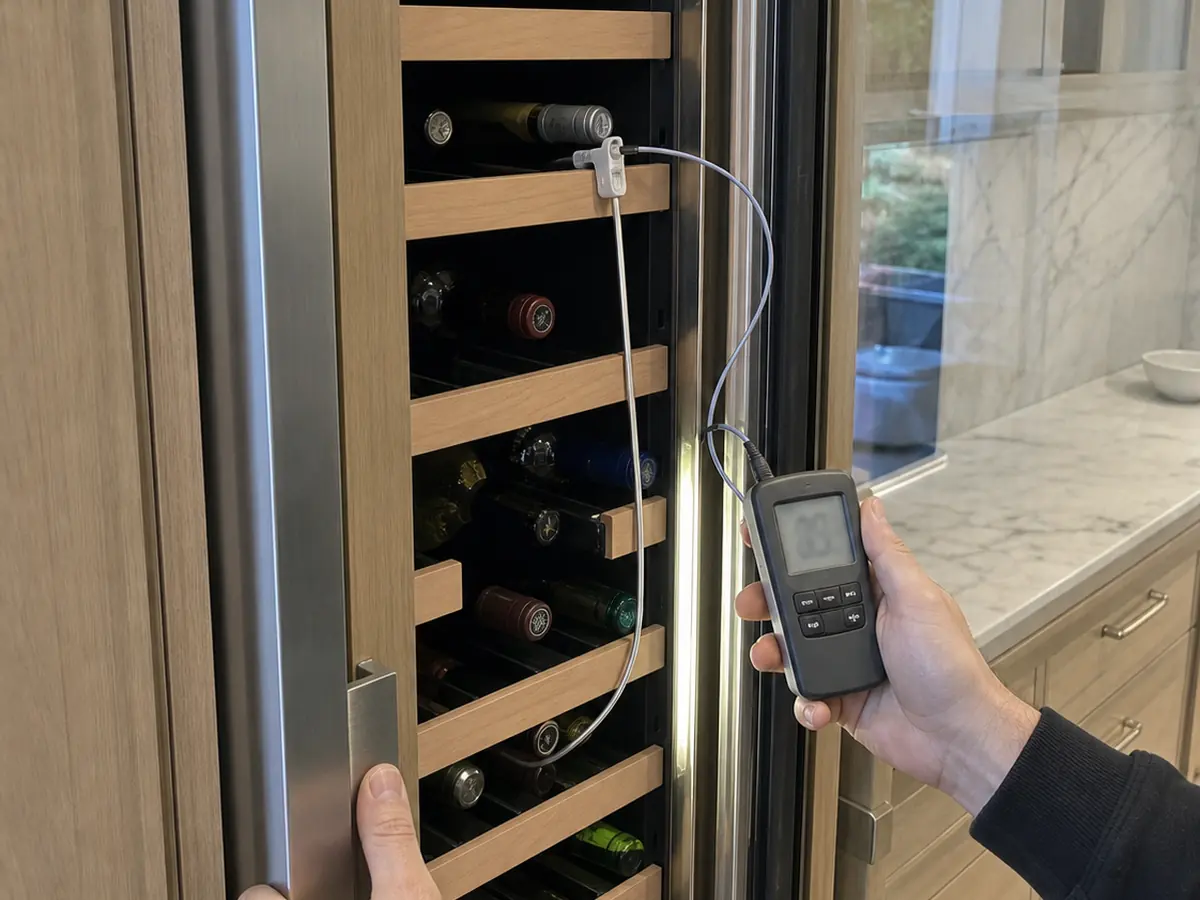
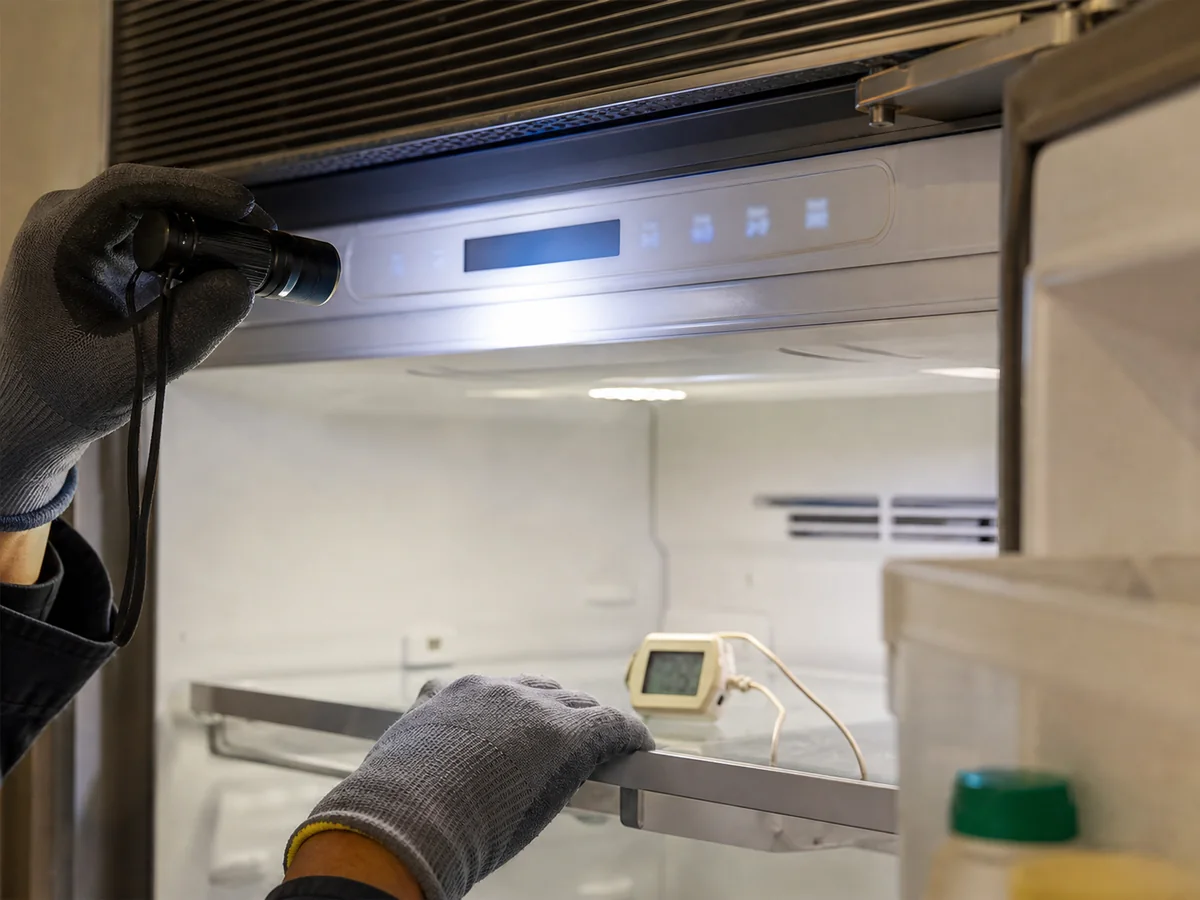
A display alarm kept coming back. They read it with the model in hand instead of a generic code chart and fixed the actual sensor fault.
Monica D.Harbor Side, Foster City
Error codes and alarms
A Foster City Sub-Zero call that mentions built-in cabinet removal or reseat risk needs more than a keyword match. Around Hillsborough, the installation may be a built-in refrigerator, freezer column, wine unit, or panel-ready cabinet fit that changes how the technician reaches the grille, door seal, controls, and model tag. The first visit should connect the symptom to temperature readings, airflow, cabinet access, and serial-specific part options before anyone recommends a large repair.
Sub-Zero alarms should be confirmed by model, symptom, and test evidence in Foster City should be handled as a diagnostic-first visit: confirm the model and serial, record temperatures, inspect airflow and visible moisture evidence, then quote the part or labor path only after the symptom is tied to a test.
Last updated: 2026-06-05. Ranges and service notes are reviewed as planning guidance; the written estimate controls final pricing, timing and warranty terms.
A display alarm kept coming back. They read it with the model in hand instead of a generic code chart and fixed the actual sensor fault.
Monica D.Harbor Side, Foster City
They didn't quote a control board off one code. Tested first, found a thermistor, and the alarm hasn't returned.
Trevor H.Sea Cloud, Foster City
Patient with a confusing alarm. Clear explanation of what the code meant and what the real cause was.
Grace L.Treasure Isle, Foster City
condenser coil packed with dust or pet hair can sound simple in a phone call, but the confirmation is physical: model and serial number, visible frost or condensation, fan behavior, temperature trend, control response, and whether the condenser area is breathing. What cannot be known before inspection is whether the symptom is a part failure, an installation stress, or a false positive caused by humidity and tight cabinetry.
The local detail matters. Homes tied to 94404 can have moisture, routing, home age, panel thickness, or kitchen access patterns that affect how Sub-Zero service is staged. A waterfront kitchen with stone floors and matched panels should not be treated like a freestanding garage refrigerator.
For door gasket leak, condensation, or frost line, useful proof includes temperature readings, condenser and evaporator photos, model-tag proof, and serial-matched OEM fan, gasket, or control-board evidence. The recommendation should say what was tested, what remains uncertain, and whether the next step is owner-safe maintenance, a part quote, or a technician-only repair. Sea Colony is referenced here only where it affects route timing, moisture exposure, or home style.

Steps that keep an alarm useful instead of masking the cause.
This table is meant to prevent false positives. It is not a DIY sealed-system procedure and it does not stand in for model-specific service data.
| Symptom | Possible component | Confirmation test | False positive to avoid | Repair path |
|---|---|---|---|---|
| Warm fresh-food section | Evaporator fan, thermistor, blocked airflow | Temperature split and fan operation | Assuming compressor from one warm shelf | Airflow or sensor path first |
| Freezer close but not perfect | Door leak, frost load, control reading | Frost pattern and gasket closure | Turning set point colder | Seal, fan, or defrost triage |
| Condenser packed | Dust or pet hair restriction | Visual grille check and run-time pattern | Cleaning with liquid near wiring | Careful dry cleaning or service |
| Hollow ice cubes | Water fill, valve, filter, low freezer temp | Fill timing and freezer reading | Replacing ice maker only | Water-path and temperature diagnosis |
| Wine drift | Sensor, airflow, condenser, door seal | Zone trend and probe check | Judging from room thermometer only | Trend readings and part verification |
| Alarm/display issue | Thermistor, board, door alarm, power event | Model-specific service check | Generic code chart without model | Model/serial led diagnostic |
| Sealed-system suspicion | Low charge, restriction, compressor issue | Certified sealed-system tests | Guessing from noise or age | Technician-only verification |
Foster City ice, moisture and cooling complaints often cross systems, so the table keeps water-path evidence separate from cooling evidence.
| Symptom | Water-side check | Temperature-side check | Likely next step |
|---|---|---|---|
| Slow or hollow ice | Filter age, fill-tube frost, valve response, visible line restriction | Freezer temperature and harvest timing | Confirm water path before ordering an ice maker module. |
| Condensation or frost line | Water-line area and cabinet humidity if moisture is widespread | Door seal contact, hinge closure and zone temperatures | Separate gasket/cabinet moisture from true cooling loss. |
| Fresh-food warm, freezer close | None unless ice maker or water dispenser changed recently | Airflow, condenser breathing, evaporator fan and thermistor reading | Start with airflow and sensor evidence before sealed-system suspicion. |
| Both sections weak | Look for prior leaks or corrosion near lower access | Temperature split, condenser fan, compressor behavior and sealed-system proof | Escalate only after basic airflow and control checks are documented. |
| Alarm or display issue | Confirm no water leak or shutoff event occurred first | Model-specific control, sensor and power-event review | Do not quote a board from a generic code alone. |
The owner photo narrows the visit, but the technician test is what should appear on the written estimate.
| Owner can photograph | Useful owner evidence | Technician must test |
|---|---|---|
| Model and serial label | Clear photo of the tag plus a wide shot showing location | Match parts, model family and service instructions. |
| Temperature display and food-zone reading | Photo of display plus owner thermometer reading after door has been closed | Compare actual temperature to control and sensor behavior. |
| Lower grille or condenser area | Straight-on photo showing dust, pet hair, corrosion or blocked airflow | Inspect fan behavior, electrical safety and cleaning limits. |
| Ice bin, fill tube or water-line area | Photo of hollow cubes, fill-tube frost, leaks or corrosion | Test fill timing, valve behavior, filter restriction and freezer temperature. |
| Panel gaps and floor path | Wide photo showing custom panels, toe-kick, flooring and route | Plan cabinet-safe access, water-line slack and floor protection. |
A code names a symptom, not a part. On older coastal units a corroded sensor is a frequent trigger, so we test before quoting a board.
| Alarm / display | Common meaning | Confirmation | Price range |
|---|---|---|---|
| Service / high-temp alarm | Temperature drift, airflow or sensor | Probe and airflow check | $165-$420 |
| Sensor / thermistor code | Drifted or corroded sensor | Probe vs control reading | $280-$640 |
| Defrost fault | Heater, sensor or board | Defrost cycle test | $360-$880 |
| Control-board error | Board or power event | Electrical proof | $420-$1,380 |
| Door-ajar / seal alarm | Gasket or hinge | Closure and seal check | $480-$1,020 |
| Ice-maker fault code | Valve, module or temperature | Fill and harvest test | $230-$720 |
A corroded coastal sensor can trigger a false alarm, so the board is the last suspect, quoted only after an electrical test.
Verify model and serial because access and part numbers vary by production range.
Integrated panels make door closure and cabinet pressure part of the diagnosis.
Heavy doors and high-capacity cooling need careful floor and hinge handling.
Zone behavior should be trended; exact values must be verified by model/serial.
Ventilation and compact placement can create symptoms that mimic part failures.
Part availability and cabinet disruption should be discussed before major work.
Before the appointment, keep a model-tag photo, a clear symptom note, and any display alarm text handy. During diagnosis, useful evidence includes temperature readings, condenser and evaporator photos, gasket condition, ice-maker fill behavior, and a note about cabinet access. If door gasket leak, condensation, or frost line is involved, the estimate should explain what was confirmed and what still needs technician-only testing.
For homes tied to 94404, this evidence can prevent a second trip because the technician can anticipate panel style, water-line questions, and likely part families.

Owner-safe checks include writing down the display message, taking a model-tag photo, confirming the door closes fully, listening for unusual fan noise, and noting whether one section or both sections are warm. Do not open sealed-system tubing, bypass controls, pull a built-in unit without protection, or test electrical components unless you are trained and equipped. Refrigerant and high-voltage control work belongs to qualified technicians.
Call now for quick help, or use the online booking page when you prefer to choose a service window yourself.
Photograph the exact code or light, note the power event, and check whether temperatures are actually affected. Many alarms after a flicker are recoverable, but repeated resets hide the cause. Book with the model and the code; diagnosis is $165-$420 and a board is only quoted after an electrical test, not from the code alone.
No. A code names a symptom, not a part. The same alarm can come from a drifted thermistor, a defrost fault, a door-ajar condition or a power event. We test before quoting; sensor work is $280-$640, defrost $360-$880, and a board $420-$1,380 only when electrical proof points to it.
Usually a high-temp or service alarm flags temperature drift from airflow, a sensor or a seal; a sensor code flags a drifted or corroded thermistor; a defrost or door alarm flags those systems. On older coastal units, corrosion-aged sensors are a frequent trigger. We confirm with probe and airflow tests, $165-$640.
Alarm diagnosis starts at $165-$245. From there: sensor or thermistor $280-$640, defrost fault $360-$880, ice-maker fault code $230-$720, door-seal alarm $480-$1,020, and a control board $420-$1,380. The board is the last suspect, quoted only after electrical proof rules out the cheaper, more common causes.
Yes. Salt-air corrosion on a thermistor's leads or connector can shift its reading, so the control flags a temperature or sensor alarm even though cooling is fine. We compare a probe reading to the control's value before replacing anything; a model-matched sensor is $280-$640, far cheaper than an unneeded board.
Stop after one reset. Repeatedly clearing the alarm hides the pattern and can let a real temperature problem spoil food. Photograph the code, note when it appears, and book. Stable evidence makes the $165-$245 diagnosis faster and prevents replacing a board that a sensor or defrost test would have cleared.