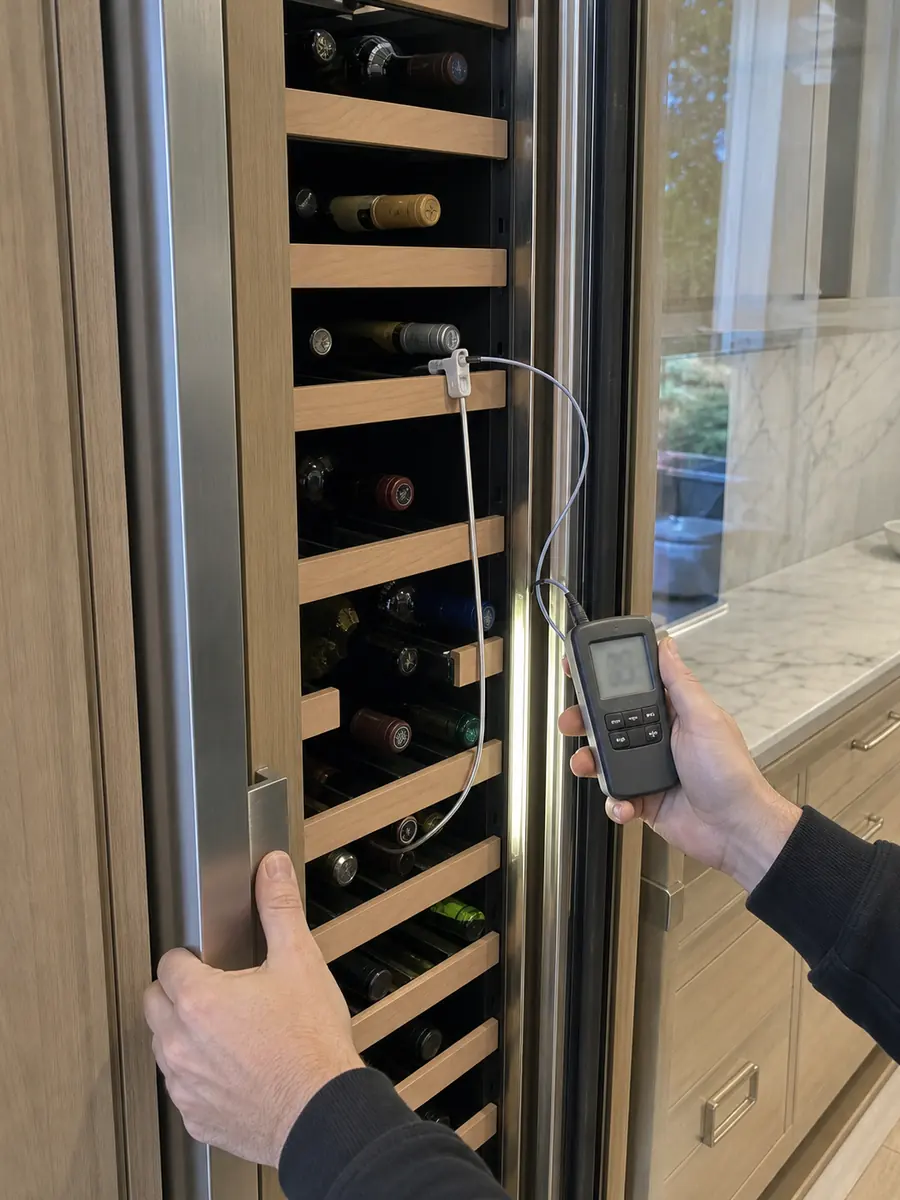
Our wine column was drifting a few degrees and they took trend readings over the visit instead of one quick check. Found an airflow issue and the zone is steady now.
Caroline F.Sea Colony, Foster City
Wine temperature drift
A Foster City Sub-Zero call that mentions door gasket leak, condensation, or frost line needs more than a keyword match. Around Leo J. Ryan Memorial Park and the lagoon boardwalk, the installation may be a built-in refrigerator, freezer column, wine unit, or panel-ready cabinet fit that changes how the technician reaches the grille, door seal, controls, and model tag. The first visit should connect the symptom to temperature readings, airflow, cabinet access, and serial-specific part options before anyone recommends a large repair.
When a Sub-Zero wine column in Foster City will not hold a steady range in Foster City should be handled as a diagnostic-first visit: confirm the model and serial, record temperatures, inspect airflow and visible moisture evidence, then quote the part or labor path only after the symptom is tied to a test.
Last updated: 2026-06-05. Ranges and service notes are reviewed as planning guidance; the written estimate controls final pricing, timing and warranty terms.
Our wine column was drifting a few degrees and they took trend readings over the visit instead of one quick check. Found an airflow issue and the zone is steady now.
Caroline F.Sea Colony, Foster City
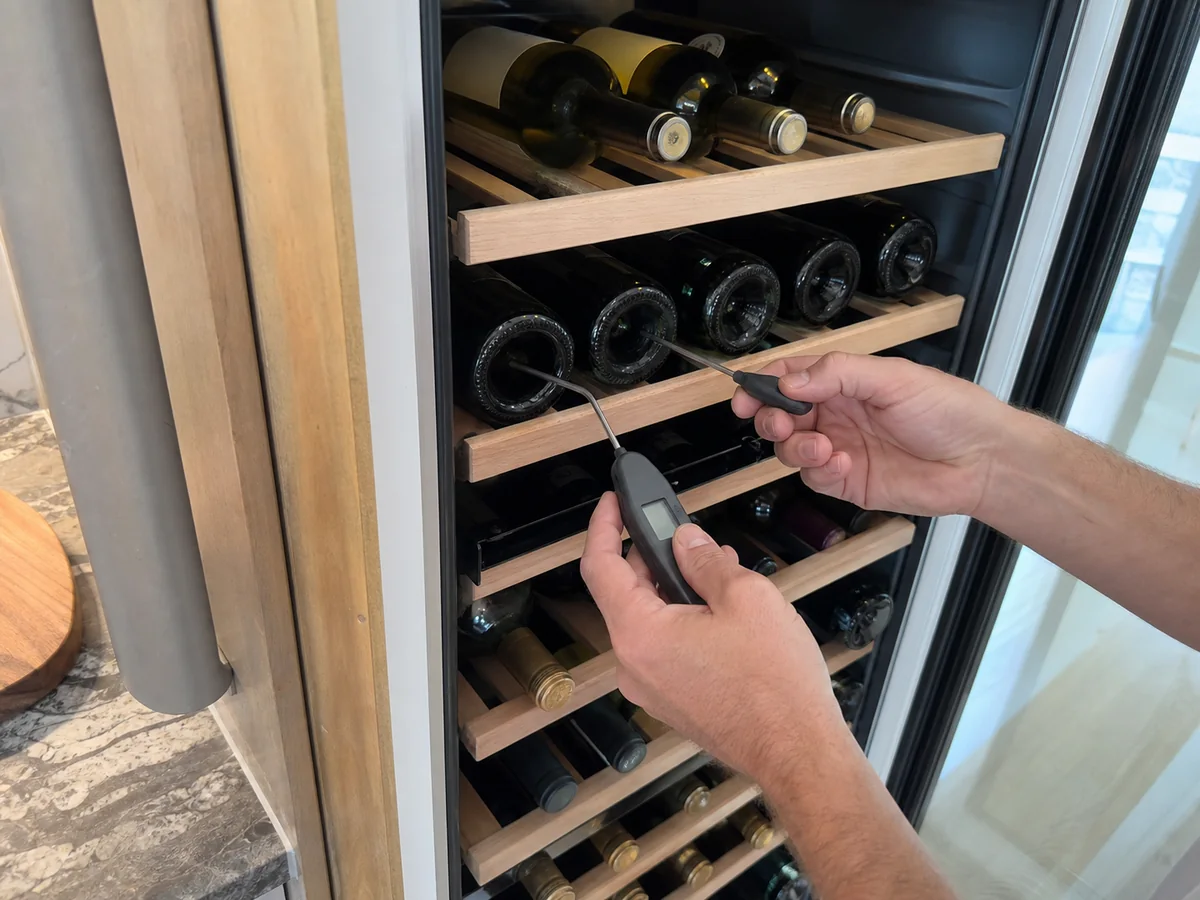
Careful work around a full wine unit. They placed a probe between bottles, confirmed the sensor problem, and fixed it without disturbing the collection.
Nathan W.Treasure Isle, Foster City
Finally someone who treats a wine column like a wine column. Patient, precise, and the temperature has been rock solid since.
Elise M.Harbor Side, Foster City
sealed-system suspicion that needs EPA Section 608-qualified refrigerant verification can sound simple in a phone call, but the confirmation is physical: model and serial number, visible frost or condensation, fan behavior, temperature trend, control response, and whether the condenser area is breathing. What cannot be known before inspection is whether the symptom is a part failure, an installation stress, or a false positive caused by humidity and tight cabinetry.
The local detail matters. Homes tied to Foster City's 218-acre enclosed lagoon system can have moisture, routing, home age, panel thickness, or kitchen access patterns that affect how Sub-Zero service is staged. A waterfront kitchen with stone floors and matched panels should not be treated like a freestanding garage refrigerator.
For built-in cabinet removal or reseat risk, useful proof includes temperature readings, condenser and evaporator photos, model-tag proof, and serial-matched OEM fan, gasket, or control-board evidence. The recommendation should say what was tested, what remains uncertain, and whether the next step is owner-safe maintenance, a part quote, or a technician-only repair. Mariners Point Golf Center is referenced here only where it affects route timing, moisture exposure, or home style.

How to confirm real drift before booking a wine-column visit.
Foster City ice, moisture and cooling complaints often cross systems, so the table keeps water-path evidence separate from cooling evidence.
| Symptom | Water-side check | Temperature-side check | Likely next step |
|---|---|---|---|
| Slow or hollow ice | Filter age, fill-tube frost, valve response, visible line restriction | Freezer temperature and harvest timing | Confirm water path before ordering an ice maker module. |
| Condensation or frost line | Water-line area and cabinet humidity if moisture is widespread | Door seal contact, hinge closure and zone temperatures | Separate gasket/cabinet moisture from true cooling loss. |
| Fresh-food warm, freezer close | None unless ice maker or water dispenser changed recently | Airflow, condenser breathing, evaporator fan and thermistor reading | Start with airflow and sensor evidence before sealed-system suspicion. |
| Both sections weak | Look for prior leaks or corrosion near lower access | Temperature split, condenser fan, compressor behavior and sealed-system proof | Escalate only after basic airflow and control checks are documented. |
| Alarm or display issue | Confirm no water leak or shutoff event occurred first | Model-specific control, sensor and power-event review | Do not quote a board from a generic code alone. |
The owner photo narrows the visit, but the technician test is what should appear on the written estimate.
| Owner can photograph | Useful owner evidence | Technician must test |
|---|---|---|
| Model and serial label | Clear photo of the tag plus a wide shot showing location | Match parts, model family and service instructions. |
| Temperature display and food-zone reading | Photo of display plus owner thermometer reading after door has been closed | Compare actual temperature to control and sensor behavior. |
| Lower grille or condenser area | Straight-on photo showing dust, pet hair, corrosion or blocked airflow | Inspect fan behavior, electrical safety and cleaning limits. |
| Ice bin, fill tube or water-line area | Photo of hollow cubes, fill-tube frost, leaks or corrosion | Test fill timing, valve behavior, filter restriction and freezer temperature. |
| Panel gaps and floor path | Wide photo showing custom panels, toe-kick, flooring and route | Plan cabinet-safe access, water-line slack and floor protection. |
A wine zone should hold a steady set point; a few degrees of summer drift is usually airflow or a sensor. Planning ranges after a trend check:
| Wine-zone job | What the tech checks | Price range | Typical time |
|---|---|---|---|
| Zone temperature diagnosis | Trend readings, probe between bottles | $165-$245 | 45-90 min |
| Zone sensor / thermistor | Probe vs control, model-matched part | $280-$620 | 1-2 h |
| Evaporator fan / airflow | Fan test and vent path | $340-$740 | 1-2 h |
| Door seal / glass condensation | Seal, humidity and closure check | $420-$860 | 1-3 h |
| Dual-zone control repair | Zone board and calibration | $480-$1,150 | 1-3 h |
Trend readings come first because a couple of degrees of drift can be airflow or a sensor, not a failing cooling system.
Signs: Long run time, warm upper shelves, dirty lower grille
Test: Inspect condenser and verify fan movement
Typical path: Clean or correct airflow before parts.
Signs: Condensation, frost line, door not closing evenly
Test: Paper-pull feel, hinge position, panel pressure
Typical path: Serial-matched gasket or alignment.
Signs: Display does not match food-zone behavior
Test: Compare probe reading to control response
Typical path: Sensor or board path after verification.
Signs: Uneven temperatures, noise, or no airflow
Test: Listen and inspect safely during call
Typical path: Fan service with model match.
Signs: Hollow cubes, slow harvest, jammed mold
Test: Check fill timing and freezer temperature
Typical path: Valve, filter, fill tube, or module.
Signs: Frost buildup and declining airflow
Test: Inspect frost pattern and defrost behavior
Typical path: Heater, thermostat, sensor, or board.
Signs: Both compartments weak after basic causes are ruled out
Test: Certified sealed-system verification
Typical path: Quote only after proof.
Before the appointment, keep a model-tag photo, a clear symptom note, and any display alarm text handy. During diagnosis, useful evidence includes temperature readings, condenser and evaporator photos, gasket condition, ice-maker fill behavior, and a note about cabinet access. If built-in cabinet removal or reseat risk is involved, the estimate should explain what was confirmed and what still needs technician-only testing.
For homes tied to Foster City's 218-acre enclosed lagoon system, this evidence can prevent a second trip because the technician can anticipate panel style, water-line questions, and likely part families.

These notes are service constraints, not decorative location text.
| Area | Diagnostic relevance | Booking note |
|---|---|---|
| Sea Colony / Treasure Isle / The Islands | Lagoon-side moisture can make gasket frost, slow ice and cabinet humidity overlap. | Have frost-line, ice-bin and model-tag notes ready before the visit. |
| Harbor Side / Edgewater Isle | HOA access, parking windows and water shutoff coordination can affect timing. | Note elevator, parking and water shutoff limits while booking online. |
| Sea Cloud | Slab-home routing and cabinet-safe pull-out planning can change labor time. | Photograph the floor path, toe-kick and lower access area. |
| San Mateo-Hayward Bridge route | Same-day timing is realistic only when model/photo evidence prevents a second trip. | Keep temperatures and symptom photos ready before asking for a dispatch window. |
Waterfront condos often mean tighter elevator and hallway staging plus humidity-sensitive gaskets.
Panel-matched kitchens can be older, so cabinet-safe access and part availability matter.
Townhome routes are compact; model photos help avoid a second visit for uncommon parts.
Lagoon moisture can turn a small seal or condenser issue into a visible temperature drift.
Owner-safe checks include writing down the display message, taking a model-tag photo, confirming the door closes fully, listening for unusual fan noise, and noting whether one section or both sections are warm. Do not open sealed-system tubing, bypass controls, pull a built-in unit without protection, or test electrical components unless you are trained and equipped. Refrigerant and high-voltage control work belongs to qualified technicians.
Call now for quick help, or use the online booking page when you prefer to choose a service window yourself.
A few degrees on warm, humid days can be normal load, but persistent drift usually means airflow, a sensor, or a door seal. A wine zone should hold a steady set point (commonly 45-55°F). We log a trend with a probe between bottles, $165-$245, before replacing a sensor ($280-$620) or fan ($340-$740).
Most owners hold a single zone around 55°F for reds or split a dual-zone unit roughly 45°F and 55°F. The key is stability, not a single number, steady within a couple of degrees. Drift beyond that, especially overnight, points to airflow, sensor or seal issues worth a trend check before parts.
Yes. Lagoon humidity can mist the glass door and, over time, stress the gasket so the zone struggles to hold temperature. Surface fog alone is often humidity; fog plus drift suggests a seal or airflow problem. Seal and closure work on a wine door runs about $420-$860 after a humidity-versus-cooling check.
Diagnosis is $165-$245. Common fixes: a zone sensor or thermistor $280-$620, an evaporator fan or airflow repair $340-$740, door-seal work $420-$860, or dual-zone control repair $480-$1,150. Trend readings come first because a few degrees of drift can be airflow or sensor, not a failing system.
Log a trend, not one glance. Place a thermometer or probe between bottles, not in open air, and record readings over several hours including overnight. One high reading after the door was opened isn't drift. A consistent multi-degree gap from the set point is the evidence that makes the visit efficient.
Yes. Dual-zone units add a second sensor, damper or control path, so one zone can drift while the other holds, often a sensor or damper rather than the whole system. Single-zone drift is more often airflow or seal. Dual-zone control repair runs $480-$1,150; we identify which zone and part first.